Boosting Farm Efficiency and Sustainability with Huge Tractor Tires
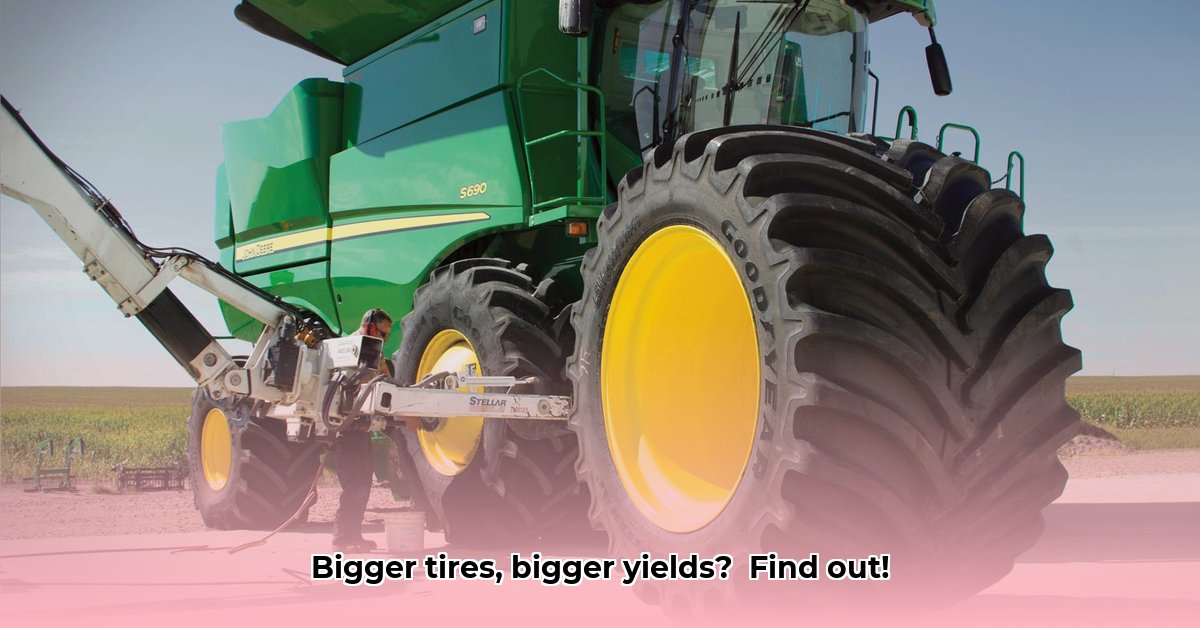
Giant tractor tires are more than just oversized rubber; they're integral to modern farming, significantly impacting fuel consumption, soil health, and overall farm productivity. This article explores the evolving role of these massive tires, highlighting technological advancements and sustainable practices that are reshaping agriculture. For more on tire weight, see this helpful resource: tire weight data.
The Growing Need for Eco-Friendly Tire Solutions
Modern farming necessitates powerful machinery, and at the core of this is the massive tractor tire. These tires are crucial for efficient operation and minimizing soil damage. However, their size and weight present environmental challenges. The critical need is balancing high performance with environmental responsibility, necessitating innovative tire technologies and improved farming practices. Are you maximizing your farm's sustainability potential through tire selection?
Huge Tractor Tires and Soil Compaction: Finding the Right Balance
Soil compaction is a major concern for farmers worldwide, reducing crop yields and overall farm productivity. The weight of large tractor tires can exacerbate this issue. However, innovative designs like Low Sidewall (LSW) tires are mitigating this problem. LSW tires distribute weight more evenly, reducing soil compaction and promoting healthier, more productive fields. What strategies are you employing to minimize compaction on your farm?
Fuel Efficiency and the Bottom Line: How Tires Save Money
Fuel costs are a significant expense for farmers. Tire selection directly influences fuel efficiency. Proper inflation and tread patterns significantly impact fuel consumption. Investing in high-quality tires with low rolling resistance translates to substantial long-term savings, often exceeding the initial tire cost. This financial benefit allows for reinvestment in other crucial aspects of your farm operation. How are you optimizing your fuel efficiency through tire management?
Tire Technology: Innovations Shaping the Future of Farming
Many manufacturers are actively developing more sustainable tire solutions. They're incorporating recycled materials into tire construction and improving durability for extended lifespan. Longer-lasting tires mean fewer replacements, reducing waste and saving farmers money. This illustrates how small changes can have significant positive environmental and economic impacts. What innovations in tire technology are you currently utilizing?
The Agricultural Tire Market: A Look at Key Players
The agricultural tire market is dynamic, with key players like Titan International continuously developing new products. Distribution strategies vary, with some companies focusing on direct-to-consumer sales while others rely on established dealer networks. Each approach presents unique benefits and drawbacks, and the optimal strategy depends on individual farmer needs. Are you aware of the latest advancements in agricultural tire technology and distribution models?
Actionable Steps for Sustainable Tire Management
Sustainable practices are crucial for long-term farm success and environmental responsibility. Here are actionable steps for farmers of all sizes:
For Larger Farms:
- Assess LSW Technology: Evaluate the suitability of LSW tires to reduce soil compaction.
- Invest in Tire Monitoring: Implement tire pressure monitoring systems for optimal inflation and reduced wear.
- Explore Direct-to-Consumer Purchasing: Assess if direct purchasing improves cost savings or efficiency.
For Smaller Farms:
- Prioritize Regular Maintenance: Regular maintenance ensures early detection of potential issues.
- Explore Cooperative Purchasing: Collaborate with other farmers for bulk purchasing and cost reduction.
- Seek Local Financing: Inquire about financing options to manage the initial cost of new tires.
Navigating the Risks: Challenges and Mitigation Strategies
Adopting new technologies and sustainable practices involves inherent risks. Here are some potential challenges and mitigation strategies:
| Technology/Practice | Risk Category | Likelihood | Impact | Mitigation |
|---|---|---|---|---|
| LSW Tire Technology | Unexpected Technical Issues | Low | Moderate | Rigorous testing and comprehensive warranties from reputable suppliers. |
| Direct-to-consumer sales | Supply Chain Disruptions | Medium | High | Diversify suppliers; maintain sufficient inventory. |
| Sustainable Materials | Raw Material Price Volatility | Medium | High | Secure long-term supply contracts; explore alternative materials. |
| Soil Compaction Reduction | Technology Ineffectiveness | Low | Low | Conduct thorough field trials and independent research. |
How to Compare LSW Agricultural Tires vs Traditional Tires for Soil Compaction
Choosing the right tractor tires is a critical decision, impacting productivity, profitability, and soil health. Analyzing the differences between Low Sidewall (LSW) and traditional tires is crucial.
Understanding the Soil Compaction Challenge
Soil compaction reduces water infiltration, hinders root growth, and decreases crop yields. LSW tires offer a solution by distributing weight more efficiently, minimizing compaction.
How to Compare LSW and Traditional Tires
Direct comparison is vital. Here's a systematic approach:
- Ground Pressure Measurement: Use pressure gauges or sensors to compare ground pressure under similar loads.
- Field Tests: Conduct field tests on representative soil types, comparing crop yields and water infiltration.
- Data Analysis: Analyze the data, focusing on the relationship between ground pressure, soil compaction, and crop performance.
The Pros and Cons: Weighing the Options
| Feature | LSW Tires | Traditional Tires |
|---|---|---|
| Soil Compaction | Significantly Reduced | Higher |
| Fuel Efficiency | Increased | Lower |
| Initial Cost | Higher | Lower |
| Long-Term Cost | Potentially lower | Potentially higher |
| Traction | Comparable or superior | Can be dependent on soil and tire type |
| Speed | Potentially higher | Generally lower |
Key Takeaways:
- LSW tires significantly reduce soil compaction.
- LSW tires improve fuel efficiency.
- LSW tires often provide comparable or superior traction.
- LSW tires have a higher initial cost. Long-term cost-effectiveness depends on tire longevity.
- LSW tires contribute to sustainable farming practices.
The optimal tire choice depends on individual farm needs and a thorough cost-benefit analysis. Independent research and field trials are strongly recommended.